Bee Hive vs Wasp Nest: What's the Difference?
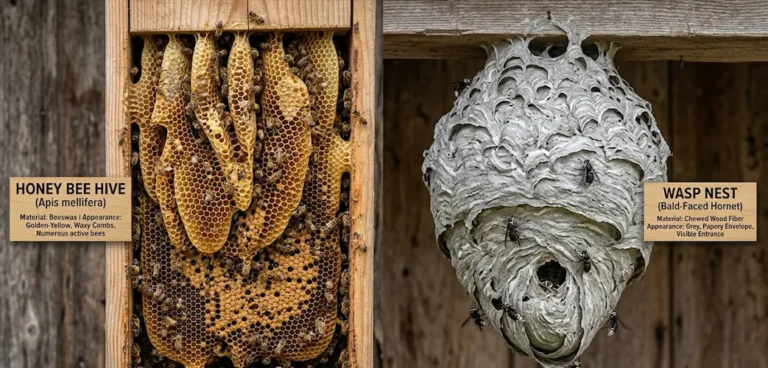
If you have stinging insects on your property, taking the right steps to protect your family matters. A wasp nest naer your home or backyard should not be ignored. Not all stinging insects are the same problem, and not all nests require the same response. Misidentifying the nest is one of the most common reasons DIY pest control goes wrong.
This guide covers the four most common stinging insect nests you'll find around a Philadelphia home:
- Honey bee hives
- Yellow jacket nests
- Paper wasp nests
- Bald-faced hornet nests
If you have a wasp problem in Philadelphia, call us for wasp nest removal. Disclaimer: We DO NOT provide pest control services for bees.
Honey Bee Hive
Appearance: Bee hives are built from wax comb. The hive possesses the famous hexagonal cell structure that most people recognize. When bees build a nest inside a wall or tree cavity, the honeycomb isn't visible from the outside. What you'll see instead is a consistent stream of bees flying in and out of a single entry point like a gap in a siding or a tree hole. Sometimes, you will see an exposed hive hanging from a tree branch.
Where You'll Find Them:
- Hollow trees & cavities that protect them from rain
- Walls, attics, and crawl spaces
- Inside chimneys
How to Handle Honey bees
Honeybees are protected pollinators, and in Pennsylvania, a colony needs to be handled with care. DO NOT ATTEMPT TO REMOVE THE NEST YOURSELF, unless you enjoy being stung by 1000 angry poison darts. Do not try to seal the entry point without treating the nest first. This is because trapped bees will find another exit and will buzz inside your walls. And a dead hive left inside a wall will only attract other nasty pests and cause moisture damage as the wax melts. A professional can help you assess whether live removal and relocation is possible or whether treatment is necessary.
Yellow Jacket Nest
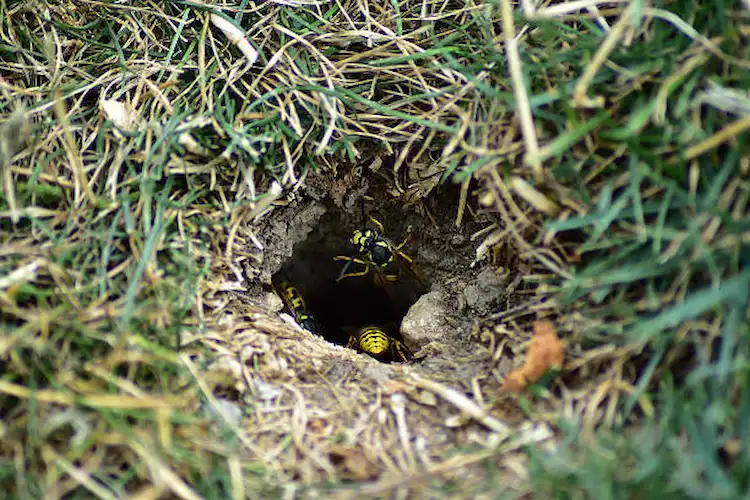
Appearance: Yellow jacket nests are built from a grey, papery material made from chewed wood fiber. The outer shell is round and layered like an onion, with a point of entry at the bottom.
Where You'll Find Them
- Underground in soil
- Abandoned rodent & chipmunk burrows
- Dense shrubs or piles of wood in your yard
- Aerial nests: Inside wall & ceiling voids or under your roof
How to Handle Yellow Jackets
Yellow jackets are the most aggressive stinging insect in Philadelphia. Unlike honey bees, they can sting repeatedly and will swarm defensively with very little provocation. Treating an underground yellow jacket nest without professional help is the most dangerous thing you can do. Lawn mowing over a nest is a very common cause of severe stinging incidents we often hear about. Do not attempt to pour liquid or seal an entry point without professional treatment. If you have an active wasp nest in Pennsylvania, call a professional exterminator for yellow jacket removal at (845) 583-8391 before someone gets stung.
Paper Wasp Nest
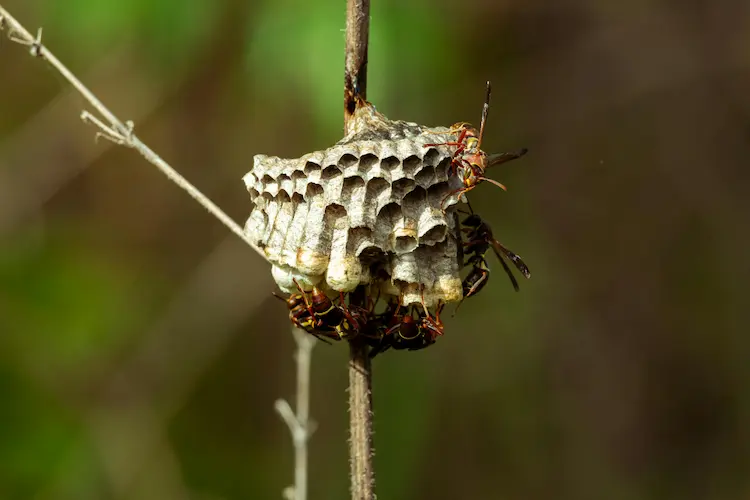
Appearance: Paper wasp nests are the easiest to identify. They look like is a thin, gray papery structure with an upside-down umbrella shape. They are about 7 inches wide and have hexagonal cells lining the flat underside. The cells are visible directly and may contain larvae or eggs if the colony is active.
Paper wasps are slender with long dangling legs and are usually less aggressive than yellow jackets, but are still dangerous. They will sting if the nest is disturbed or approached too closely.
Where You'll Find Them
Paper wasps chew up wood and make paper of it by mixing it with their saliva. You will often their nests around sheltered wooden structures:
- Tree hollows
- Under roof eaves and overhangs
- Sheds & covered patios
- In door & window frames
How to Handle Paper Wasps
A small paper wasp nest caught early in spring when the queen has just started building and the structure is golf ball-sized can be treated with wasp spray at night when the colony is inactive. Take care as there is still a chance that you will get stung. Always treat after dark when wasps have returned to the nest. Never approach from directly below.A larger nests should be handled professionally to ensure that the entire colony is exterminated and does not rebuild a nest in the same spot.
Found a paper wasp nest under your eave or on your porch? Call Keystone Pest Pros at (845) 583-8391). We'll remove it safely and treat the site to prevent them from rebuilding.
Bald-Faced Hornet Nest
Bald-faced hornets are common stinging bugs in Pennsylvania. They are black and white, larger than yellow jackets, and are very defensive. Bald faced hornet nests are oval, gray, papery and can reach the size of a basketball by the end of summer. Unlike yellow jacket nests, the nests are almost always built above ground.
They will actively pursue a threat well beyond the nest perimeter.
Where You'll Find Them
- Hanging from tree branches.
- Under roof eaves
- Attached to utility poles of fencing
How to Handle Bald Faced Hornets
DO NOT approach an active bald-faced hornet nest. Bald faced hornets will actively pursue you, even if you are far away from their nests. Their defensive radius is larger than most people expect, and they don't require physical contact with the nest to trigger a swarm response. Vibration from nearby activity, noise, or proximity alone can be enough. Nests at height add a safety risk on top of the sting risk. This is a job for a professional. If you spot a large gray nest around your home or yard, don't get any closer. Call your local wasp exterminator!
Found a Wasp Nest? Do This...
1. Keep your distance.
Don't try to inspect it up close, or poke it, or try to seal it off. Keep your family and pets away from the area.
2. Don't try to remove it yourself.
Wasps and hornets can sting you repeatedly. Many people and pets have allergies they may not know about until they stung. Wasp and bee stings cause about 60-70 deaths per year in the US. Almost all of these deaths are due to severe allergic reactions. Underground nests are especially dangerous because they're stumbled upon accidentally.
3. Call a professional.
An active nest near your house, your children's play area, or your outdoor living space is a safety risk. Even after a nest is removed, pheromone signals left behind will attract new colonies to the same spot the following spring if the site isn't properly treated. Call a professional wasp exterminator who will treat the infestation for you.
Protect your Home from Wasps...
Call Keystone Pest Pros. We serve Philadelphia and surrounding neighborhoods. We handle yellow jackets, paper wasps, and hornets. We will take care of any hard-to-reach nests, whether underground or in your roofing.
For over a decade, Philadelphia homeowners and property managers have counted on us to investigate and solve wasp problems safely and completely, so you can get back to using your yard without looking over your shoulder.
Call Keystone Pest Pros at (845) 583-8391 for a fast on-site inspection and nest removal.
DISCLAIMER: We do not treat bees. Our team only handles wasps & hornets.
Looking for other pest control services?
We also offer complete pest control solutions for a variety of infestations. Explore our other services below: