How to Tell if you have a Rodent Infestation

Rodents are opportunists, meaning one lone mouse can wander inside your home through a gap one day and leave the next. What signals a serious problem is repeated rodent activity and hearing weird sounds in your walls night after night. The combo of Philadelphia's dense neighborhoods, extensive sewage systems, and cold winters make this city a breeding ground for rodent pest problems. We will cover the 4 most common rodents in Philly: House mice, Norway and roof rats, and deer mice. Each species leaves different signs, and knowing exactly what you're dealing with changes the treatment approach.
Seeing rodent activity in your Philadelphia home? Call Keystone Pest Pros at (845) 583-8391 for a same-week inspection.
Sign #1 - Rodent Poop
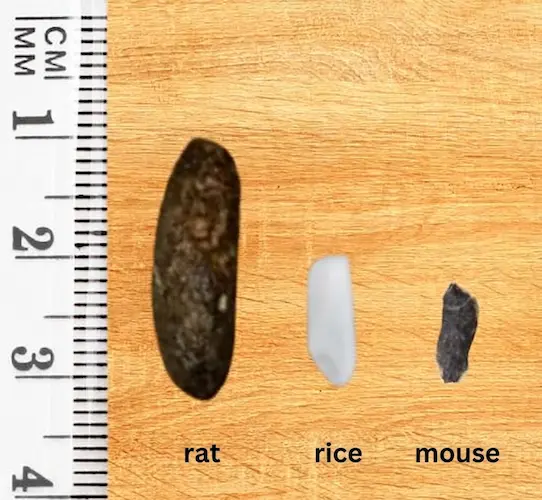
The size and shape of the droppings will help you identify the type of rodent:
- Mouse droppings: tiny (3-5 mm), with pointed ends. About the size of a grain of rice.
- Rat droppings: larger (15-20mm) with blunted ends.
Where to check for rodent poop:
- Floor-level kitchen cabinets
- Behind refrigerator and stove
- Basement and attic
- Pantry shelving
- Any area with food storage.
Fresh rodent poop is darker and moist. Older droppings are dry and crumble easily. If you find fresh droppings repeatedly in the same areas, you probably have an active rodent infestation.
Sign #2 - Scratching Noises in your Walls or Ceilings
Hearing scratching or gnawing sounds inside your walls at night is deeply unsettling, and it's a probable sign of active rodent activity. Rodents are most active from dusk to dawn. Be aware that rats are not the only pests that produce sounds in your walls.
Rodent Sound Profile: Nighttime scratching, scurrying, gnawing (chewing on wood or plastic), and distinct thumping or bumping noises.
Cockroach Sound Profile: Very faint nighttime rustling. If you turn on the lights, the sound usually stops as the roaches scatter.
Carpenter Ant Sound Profile: Very faint nighttime rustling and crackling. Other signs include small piles of sawdust (frass) outside tiny holes.
Sign #3: Chewed Wires & Food Packaging
Rodents constantly chew because they have teeth that never stop growing. Look for:
1. Food packaging with chewed holes: bags of rice, pasta, cereal, and pet food are prime targets
2. Gnaw marks on cabinet corners, baseboards, and door frames.
3. Shredded insulation, paper, or fabric: used to build rat nests.
4. Damaged electrical wiring: rodents chew through wire insulation regularly, and this is a serious hazard.
The National Fire Protection Association estimates rodents are responsible for roughly 20–25% of all house fires with undetermined causes. If you're finding gnaw damage near wiring or in areas with electrical runs, it is important that you call a professional rodent exterminator. Protect your house from fire damage by hiring your local pest control company.
Sign #4 - Your Cat is Acting Weird
Dogs and cats will detect rodent activity long before you can. Their hearing and smell pick up on rat movement, urine, and pheromones trails that are completely invisible to human senses. If your cat or dog is fixating on a specific section of a wall repeatedly, there's probably some kind of creature in that area.
Sign #5 - Grease Marks & Rat Trails
Grease marks are dark, oily smears left by the oils and dirt in a rodent's fur as it repeatedly brushes itself against walls. They appear along the base of walls, around pipe penetrations, and on the edges of any gap rodents use as an entry point. Norway rat rub marks are particularly pronounced and easy to spot near foundation gaps and utility entries.
Footprints and tail drag marks show up in dusty areas like basement floors, attic insulation, and the top of joists. If you want to confirm active movement in a suspect area, dust the surface lightly with flour or talc and check it the next morning.
Common Philadelphia Rodent Hiding Spots
1. Basements: Norway rats burrow along foundation walls and establish nests in clutter and stored items
2. Attics: Roof rats are excellent climbers and enter your home through a roofline.
3. Behind appliances: The warmth and darkness behind refrigerators, stoves, and dishwashers make them perfect hiding spots for mice and rats.
4. Crawlspaces: low-traffic and rarely inspected.
5. Garages: they sneak in through gaps in your garage door.
Check these areas first for any of the signs listed above.
When Rodent Activity Becomes an Infestation
A major sign like rat feces or chewed electrical wires requires your immediate attention. Consider it an infestation when you're seeing:
- Fresh droppings in more than one location
- Audible activity in walls or ceilings more than one or two nights
- Chew damage on food packaging, wires, or structural materials
- Daytime sightings: rodents active during daylight hours signals a population large enough that competition for space is pushing individuals out at off-hours
Rodents reproduce fast. A house mouse reaches sexual maturity in six weeks and produces up to eight litters per year, with six to eight pups per litter. That's about 50 mice from just one female. A modest indoor population can become a serious infestation within a single season if left unaddressed.
Don't Let Rats Burn Down your House!
Early detection and fast action are the difference between a single treatment and a repeat exterminator visit. If you're seeing more than one sign on this list, that's your window to act before it gets significantly harder and more expensive to solve. For Philadelphia homeowners, call Keystone Pest Pros at (845) 583-8391 — we'll inspect, identify the species, locate the entry points, and give you a personalied treatment plan to make sure rats and mice never disturb you every again.
Frequently Asked Questions
Still have questions? Call us now and speak with a Philadelphia rat exterminator.
Looking for other pest control services?
We also offer complete pest control solutions for a variety of infestations. Explore our other services below: